About the Process of Tanning
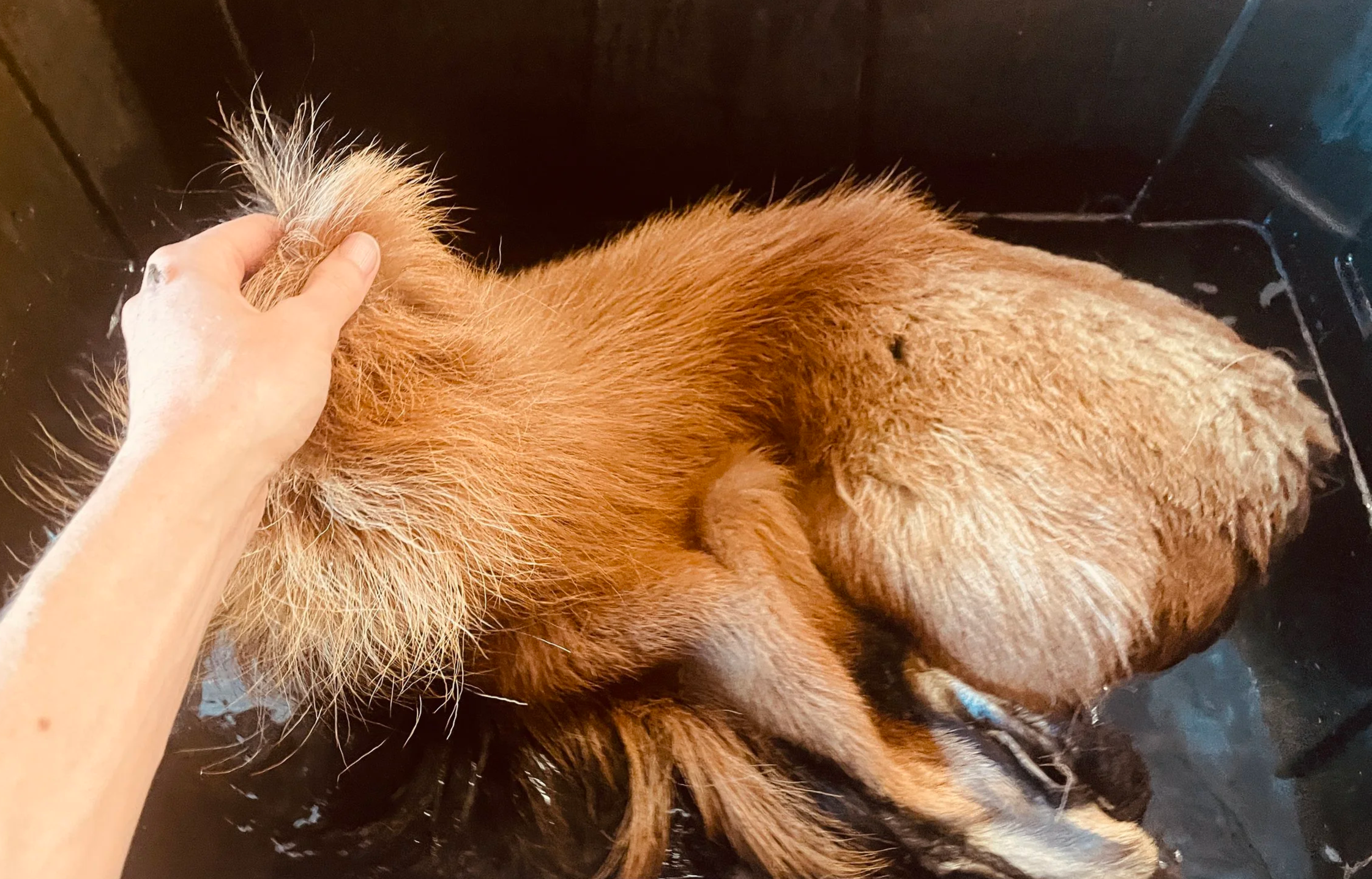
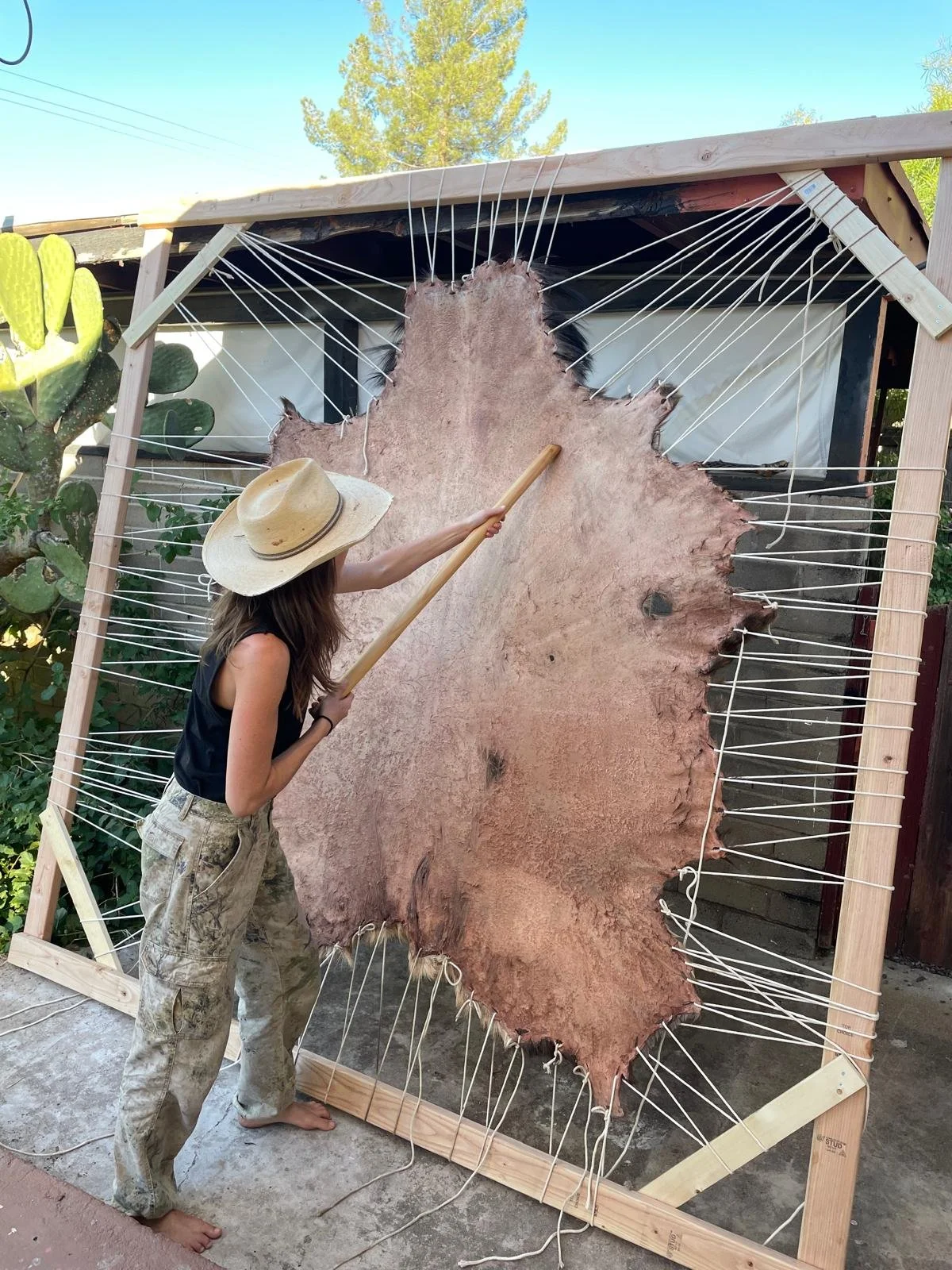
Taking an animal hide and making it into leather is an ancient process that all of our way-back ancestors practiced at some point. The process generally involves rinsing and squeezing out the glue-like material that makes a hide stiff (think rawhide), transforming the remaining proteins into something that doesn’t deteriorate (in bark tanning, the tree bark does this part; in brain tanning, it’s the smoke), conditioning the hide with fats and oils for softness, and stretching the hide for suppleness.

How do you tan a hide,
and how long does it take?
For someone with experience, the whole process of taking a deer hide and making it into leather takes about 20 hours of active work time, and weeks to months of passive waiting time. For something bigger like an elk or a bear, it takes quite a bit longer.
There are roughly 20 steps involved in tanning a hide. If you are interested in the different steps and how much time each one takes you can look into that here.
How do you tan a hide, and how long does it take?
For someone with experience, the whole process of taking a deer hide and making it into leather takes about 20 hours of active work time, and weeks to months of passive waiting time. For something bigger like an elk or a bear, it takes quite a bit longer.
What materials do you use to tan the hides?
All of my tanning is done by hand using traditional methods and simple, natural materials. Here’s what I use:
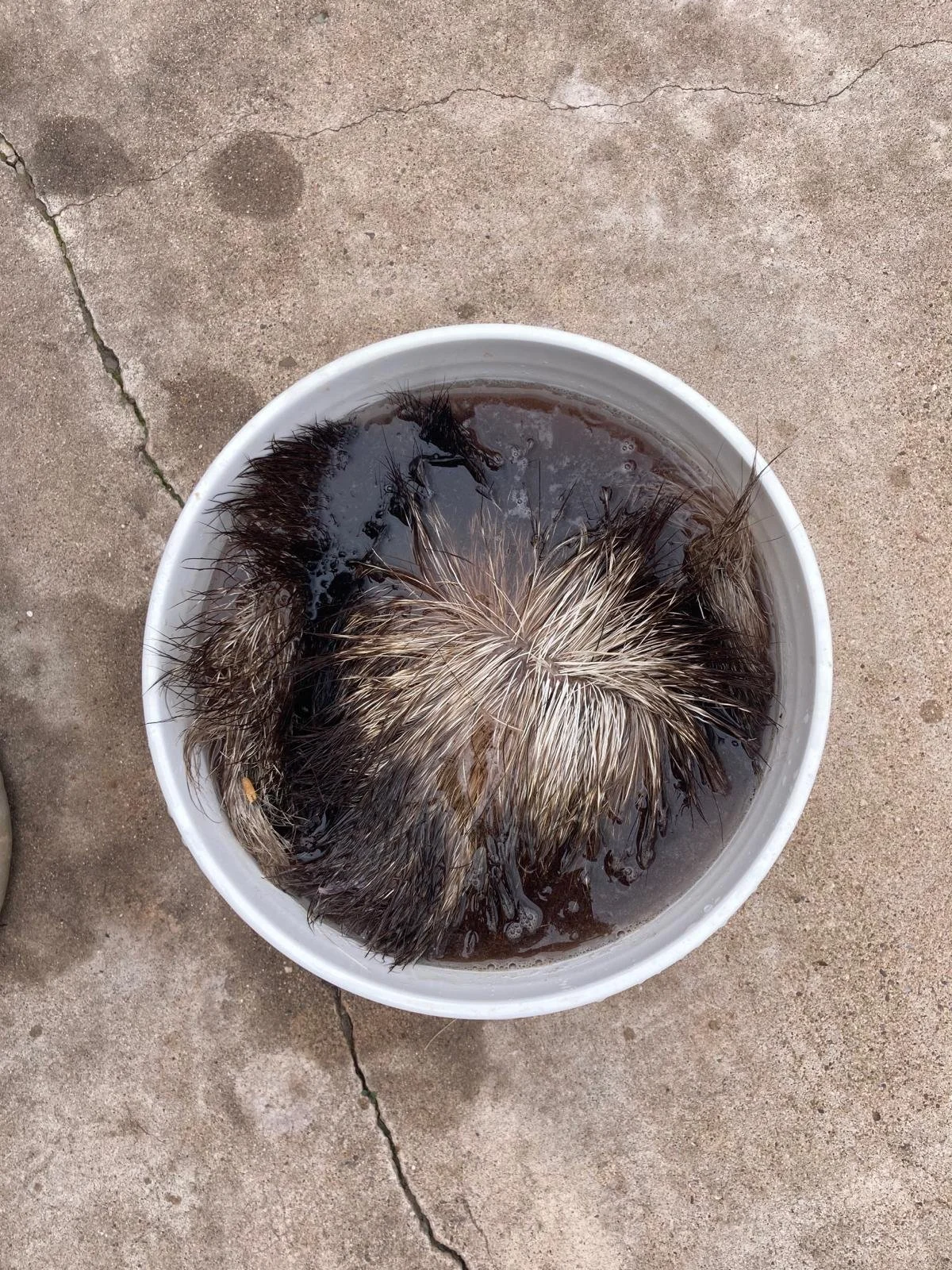
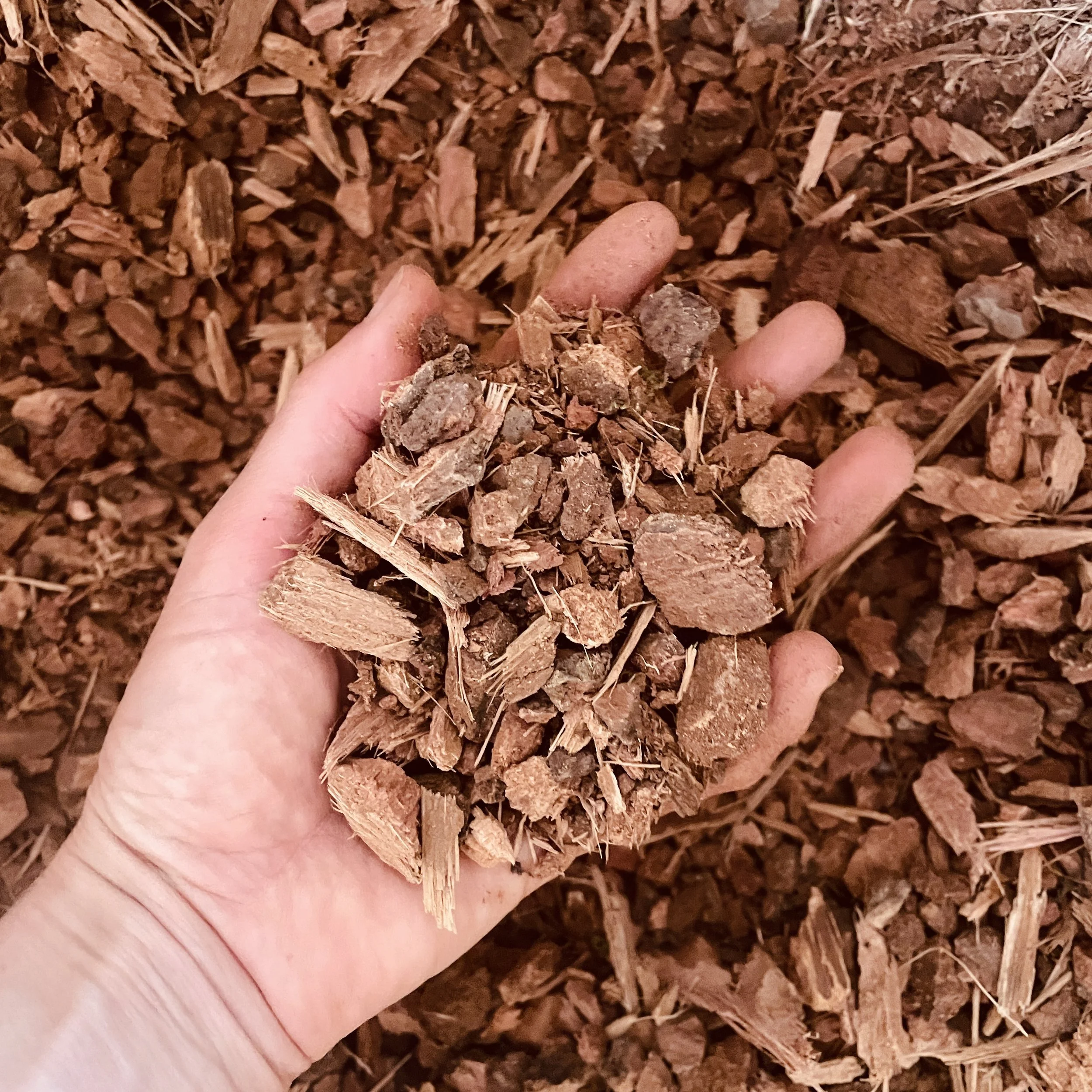
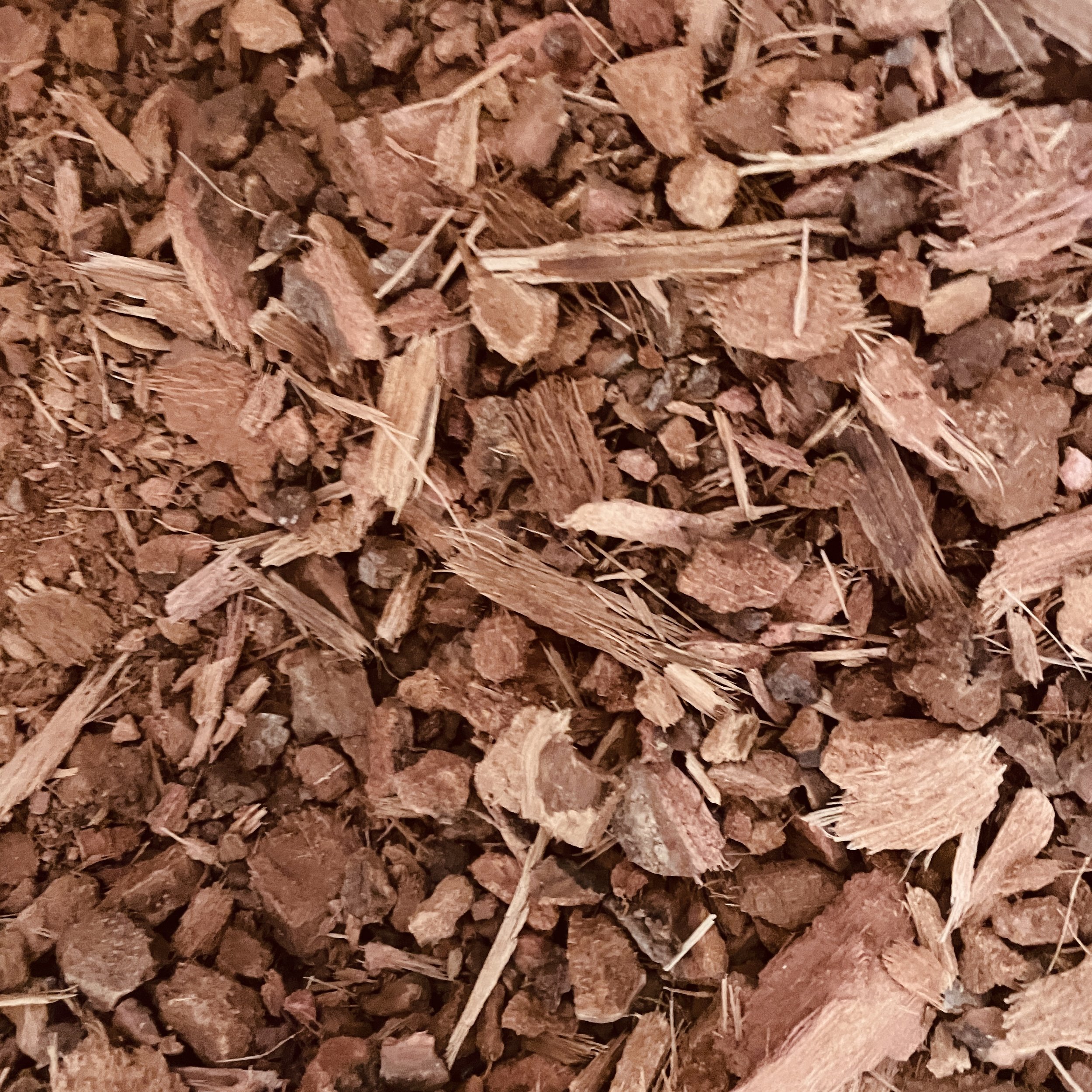
Tree bark: Many plants can be used to tanning, but I primarily use oak tree bark and mimosa tree bark to tan my hides.
Oils and fats: For ultimate softness and suppleness, I use olive oil, neetsfoot oil, lanolin, tallow, and beeswax.
Egg yolks: Also used in the conditioning step, I blend these with olive oil and water and apply the emulsion to the hide.
Vinegar & Oat Bran: These help to adjust the pH of the hide at certain points in the process.
Lime: I use ground up limestone to prepare hides that will become leathers (not furs), as it encourages the hair or fur to slip off easily.
Citric acid: This makes an acidic bath for hides that will become hair-on rugs or furs, as it helps to lock the hair in.
Salt: Used mostly in the pre-tanning preparation baths, and also to make leather that is less dense and lighter in color.
What tools do you use?
On the one hand, tanning is an art that requires a lot of specialized knowledge and skill. On the other hand, it’s really pretty simple; our way-back ancestors did it with just stone knives and bone tools, and some people still do.
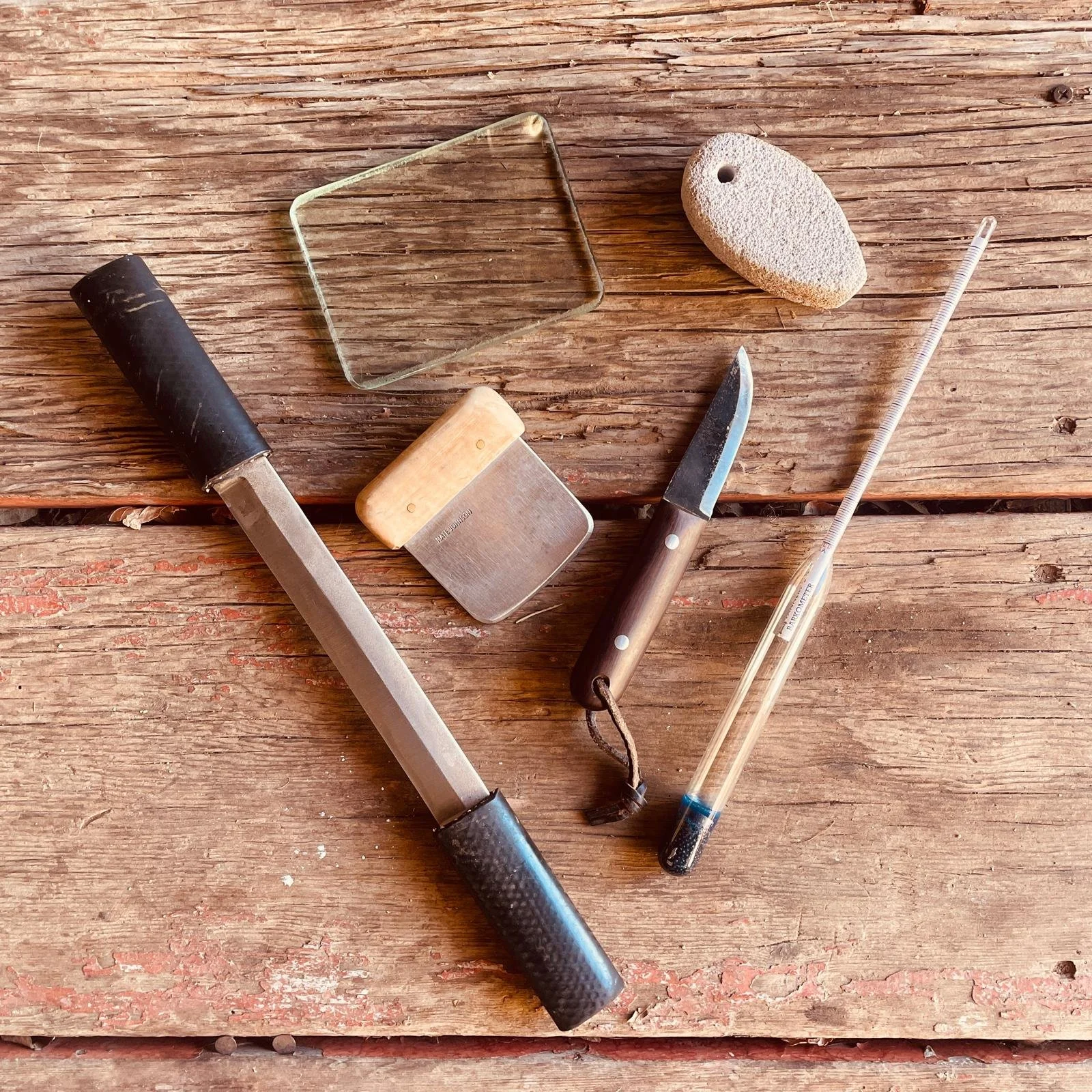
These are the tools that I use to tan hides:
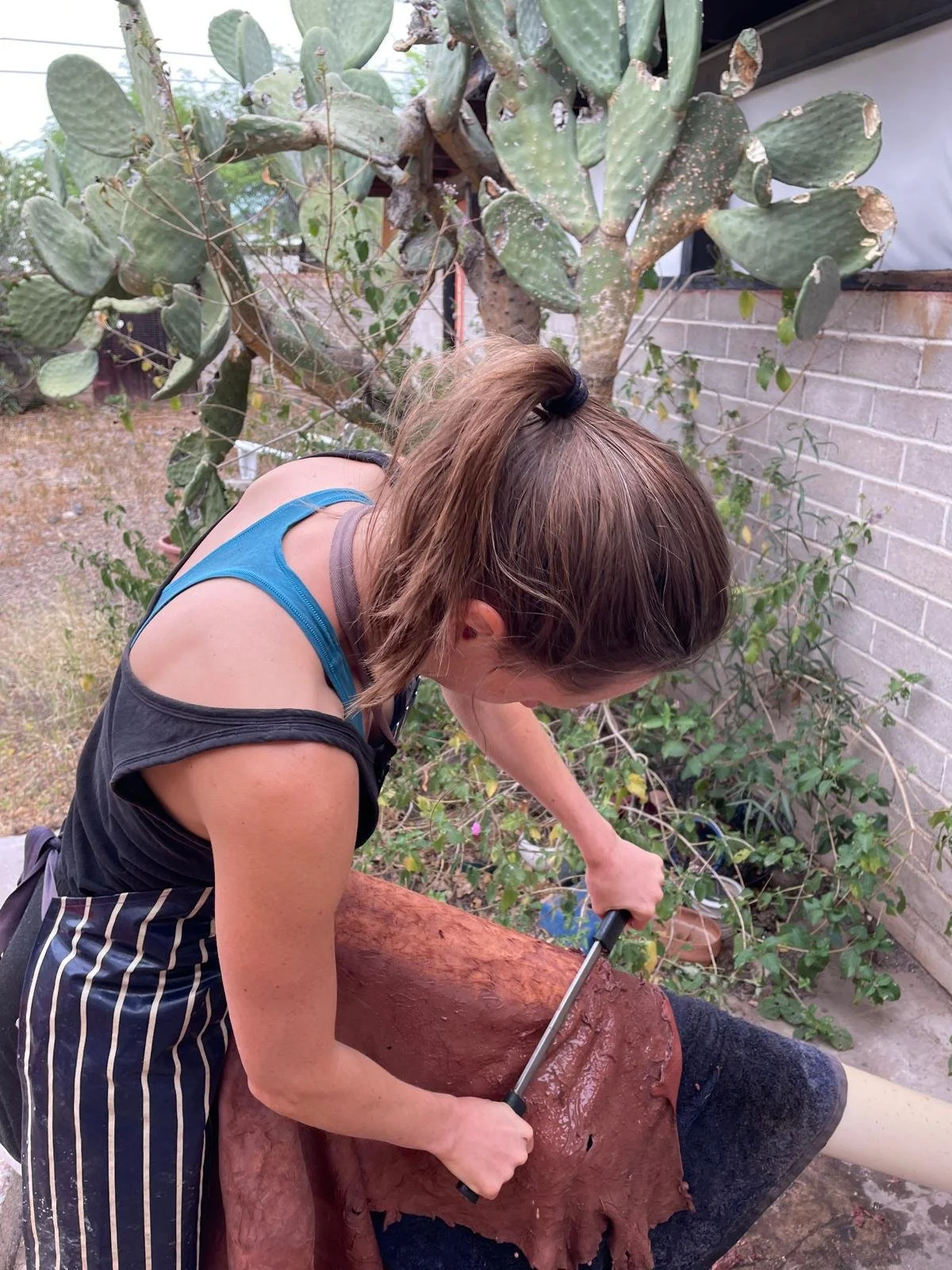
Fleshing knife for fleshing and removing the membrane from the hide to prepare it for tanning.
A softening tool that i also use for scudding (aka squeezing out residual lime and soluble proteins).
Bushcraft knife for trimming the hide.
Barkometer for measuring how strong my tannin solution is.
Pumice stone for smoothing out the underside of the hide after it’s tanned.
Glass slicker for smoothing out the top side / grain side of the leather as it dries.
How is the traditional tanning method different from industrial tanning?
The industrial tanning process uses chromium, a highly toxic chemical that is dangerous to humans and animals and a major pollutant in water. Traditional tanning methods (such as bark tanning or brain tanning) use simple, natural materials that are safe for humans, animals, and the environment. The traditional method also produces leather that is more durable and will last for generations, whereas “chem-tanned” or “chrome-tanned” leather will degrade more quickly.
And lastly – the traditional method takes a lot, lot longer! But the end result, and the no-harm impact – plus, the chance to keep this ancient skill of our ancestors alive – is well worth it.
How do I take care of my tanned leather or rug?
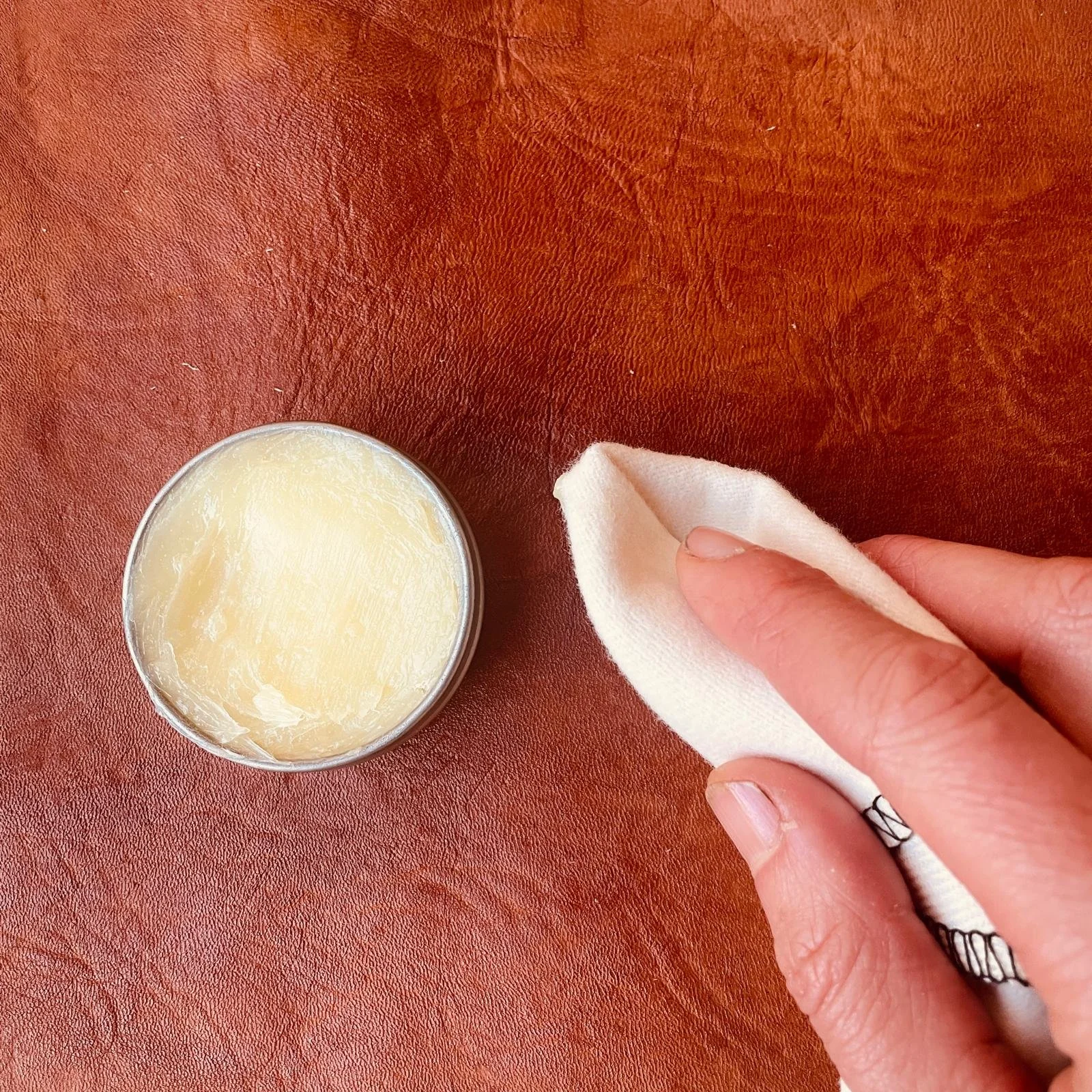
For leathers: In a dry climate (like Tucson), make sure to condition the leather every once in a while (especially if you notice it looking dry), just like you would your leather boots or shoes. I make a custom blend of tallow, beeswax and lanolin that you can buy in the online shop, or you can use an oil or oil/wax combo of your choice.
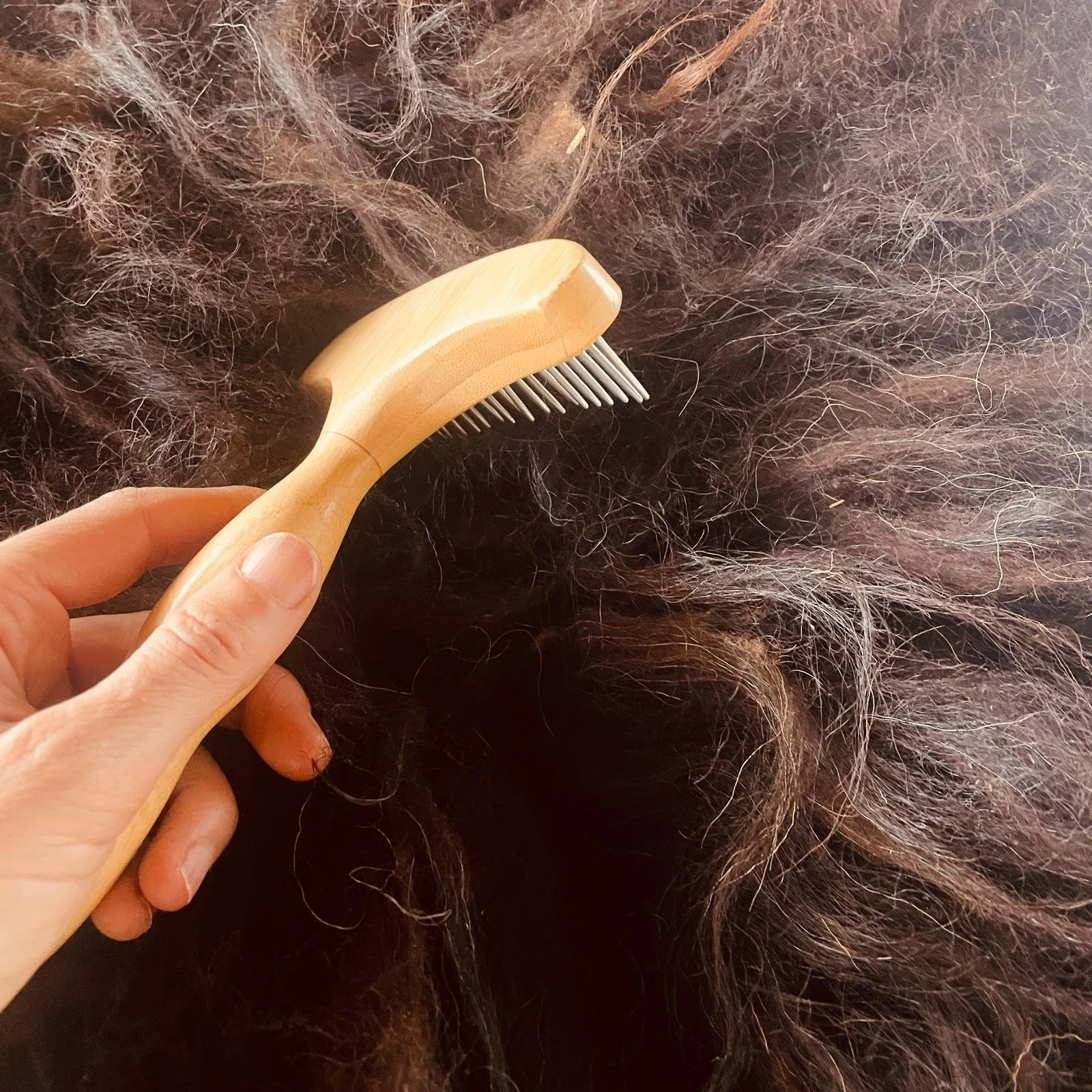
For furs and rugs: An occasional shake outside will remove any debris. To fluff up or smooth out a rug, brush with a standard wide-toothed pet brush. To air out the rug, hang dry in the sun for a day or two. To spot clean, just use a damp cloth.
Why is hide tanning important?
Learning to make animal hides into leather and fur for clothing is what enabled our way-back ancestors to migrate into colder climates and survive. For roughly 100,000 years, humans were exclusively using animal hides for clothing – it wasn’t until much more recently that woven plant material and wool came into the picture to keep us covered and warm.
The practice of tanning animal hides and creating leathers and furs is a direct connection to our deep humanness, something that every one of us shares in our ancestry. Tanning also provides a reassuring reminder of how what we need is all around us, and that our hands have the ability to create the things that support our lives and our wellbeing.